Tuesday, January 6, 2026

Back to the Beginning

 It's the beginning of 2026, the start of a whole new year. Lets hope it's a good one.  The last year was somewhat trying for me. Not only was there a lot of effort into getting the second M4 engine game, Ripley's Believe It Or Not: The Riddle of Master Lu working, I transitioned straight into working on supporting the other Bagel engine game as well, Hodj n' Podj. And that.. oh that.. it was a game made using the Microsoft MFC Framework.

Since it was a collection of minigames tied together by an overall boardgame, I initially had some hopes of refactoring the codebase to not need MFC code. This would keep things simple and clean, and since each minigame was discrete, it would keep the refactoring complexity down. At least, that was my thinking. I had started doing so with a few minigames, and it worked well. However, it came unstuck when I tried to work on the boardgame "metagame". The code was just too complicated to easily refactor, particularly it's heavy use of various drawing surfaces, bitmaps, and various palette handling code.

In the end, I had to implement a whole new MFC replacement sub-system for ScummVM that could simulate both the core MFC and the underlying Windows control classes so that we could get the original game code to work. And boy did it take a long time to get right. So many special cases to handle. Finicky special cases, such as handling different drawing modes between bitmaps, or palette translation logic that depended on whether a bitmap had a palette assigned to it or not. And the whole event handling. Sigh. Months and months of work getting to a point where Hodj n Podj could finally be run using the original code mostly as-is.

Even now, the MFC layer isn't perfect. Ideally, each MFC window should have it's own drawing surface, but in ScummVM everything blits onto the single screen surface. This causes minor problems in a few places, such as in the Poker minigame, where rendering of the poker buttons can appear partially on top of a foreground dialog being shown. I did experiment in a branch with adding support for separate surfaces that only blitted the visible areas of windows to the screen.. but that caused issues with the "scroll" dialogs, where the transparent sections on the left and right hand sides of the scroll no longer transparently showed screen content behind it any longer. Thankfully, the overlaying issue is just a minor problem, so I've shelved experimenting with it further for now. I've just been too burned out on MFC to want to keep working on it.

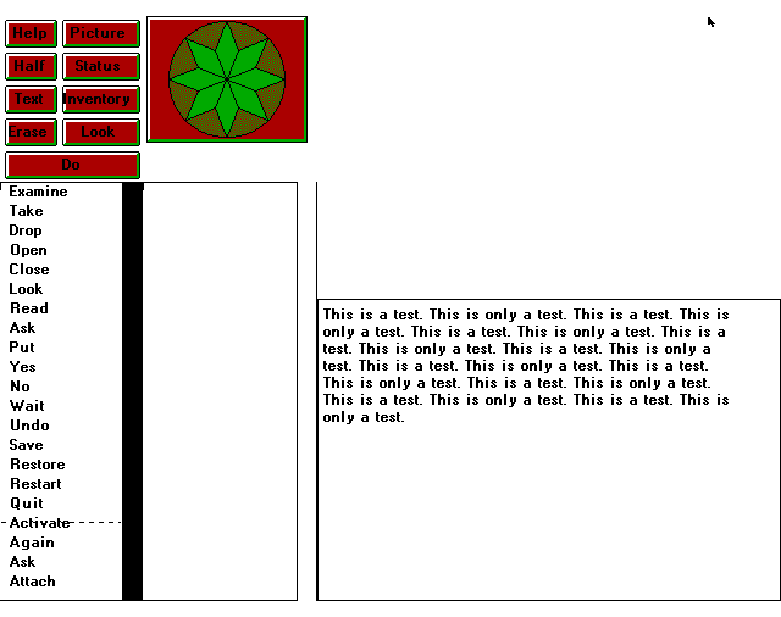
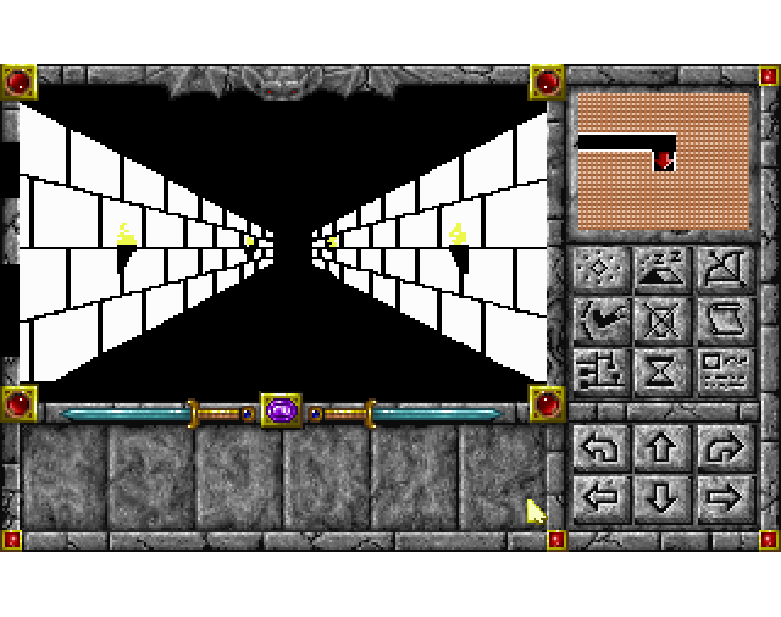
Since then, at the end of the year, I've finally felt free to work on other stuff at random. As has been my practice, I spent the Christmas holidays working on porting an existing open source project to ScummVM. And for this year, given some time constraints, I decided to work on a simple one that implements the game Akalabeth: World of Doom. The pre-cursor to the Ultima series:


The project in question was implemented by Paul Robsin, and a backup of the source can be found here. The code was somewhat rough, so I had to polish it up, and fix some bugs. I also re-wrote the code using our view-based engine framework. So in this cleaned version, each screen like the overworld map or the dungeon has it's own view class for drawing, and a centralized event handler and dispatcher that sends events to the views, and makes it easy to switch between them. This saves a lot of framework that Paul's project had to do to control program flow, and simplifies the implementation. The code has been merged into the ScummVM master as a sub-engine under the Ultima engine. It's mostly complete. I just need to do some fixes to the dungeon rendering and combat systems before I call for public testing. 

Apart from that, previously at the end of the year I've been reveling in the freedom from Hodj n Podj to flitter between several other projects I may return to once the remaining Akalabeth code has been cleared up. These include:

  • I started on an import of the oldest available AGS2 codebase to see if I could get it up and running. This is part of a longer term plan that with an clean stand-alone AGS2 engine without all the code bloat of later versions, it will be easier to disassemble some of the earliest unsupported AGS games to figure out what previously deprecated weird s**t they did and add support for it. Kind of like how the various plugins had to be disassembled so they could be implemented as source.
  • Despite my protests about being burned out on MFC, on a branch I made it part of common/ as a enable-able feature, and used it to import the available source code for the game Spycraft. The game doesn't directly use MFC, but it does use raw Windows controls. So it was fairly easy to create a dummy MFC CWinApp application class for the game, and change the game's window creation to use an MFC window class. Currently, the entire codebase is compiling, but something's happening during startup and data loading before anything is displayed. I'll likely return to this first after Akalabeth, since it feels like it's almost to a point where everything will just start working.
  • I also made a tentative restart on importing the AESOP32 source code for playing Eye of the Beholder 3. The import is only part way done, so there are still various code files remaining. Primarily some low level code files, which I have the vague recollection had assembly that would need to be converted to C code. Maybe ChatGPT can help.
  • Also did some compilation fixes and review of my Wasteland engine.
    • One of these days I'll get back to working on it.
    • Though come to that, I do still have my Legend engine languishing around - both for the early text parser based games, as well as the later graphical ones of Companions of Xanth, Shannara, and Death Gate.
    • That reminds me that I still have a compiling implementation of the Freedink engine, but which has graphical display issues. I was working on a few years back when I suffered a serious accident, and although I logically know it's unrelated, I've just been leery of returning to working on it.
As I said earlier, I've been having fun flitting from one project to another without having to worry about any commitment to finishing any of them. I want to take things easy for a bit, and see how my mood takes me. Maybe spend some quality time doing fresh disassembly, in which case maybe the AGS2 or Legend engines.. we'll see 😀 

Tuesday, May 6, 2025

A whole new world

 After 21 years, a lost engine returns to the fold with the merge of the Another World engine.


Thanks to the hard work of cyx, whose original engine was originally merged in on May 5th 2004, but was shortly thereafter removed at the request of the original game's author. He was working on the 15th Anniversary release at the time, and wanted to avoid confusion. Now in 2025, some 21 years later, cyx's further work on the game, as the standalone rawgl project, has been once again merged back into ScummVM.

Currently, only the DOS and Windows 3.1 original releases are supported, and some assistance will be needed to convert the project's custom music player to work in ScummVM. As I don't think it's a standard format we already support. As for the Anniversary releases, they currently default to as-of-yet unsupported OpenGL driver code that's currently disabled. This will likely needed someone more familiar with 3d code to implement. I'm not entirely sure if it's mandatory or not for the anniversary editions. When I tried to force it to use the SDL (now ScummVM) graphics driver the engine has, it still crashed on startup. So that's something I'll have to investigate further.

Another nice to have for the future is if a savegame format can be introduced as a supplement to the level/area codes the original used. The original ScummVM engine back in 2004 had experimental savegames, but it seems it was later dropped from the standalone rawgl project. It would be interesting to see if the original savegame code could be retrofitted into the current engine.

Anyway, any help with polishing off the engine and/or adding support for more of the different releases would be warmly appreciated, as the lion share of my time is still being spent on trying to implement support for Hodj n Podj, the other Bagel engine game. Not to mention Riddle of Master Lu is still patiently waiting for further bughunting polishing. Busy busy busy. :)


Monday, January 15, 2024

Christmas 2023 holiday roundup

 Seems like it's been a full year since my last blog posting. I think that at this point, I'll just have to accept that I'm not very good at making regular postings. At least you all can take solace that my output of work on implementing support for new games in ScummVM remains unaffected. :)

So, what's been happening in the last year? Well, first of all, I finished implementing support for Might and Magic 1. The game itself was pretty primitive, but it was an excellent candidate for something I'd wanted to do for a while - not just reimplementing a game, but adding an enhanced mode that would breathe new life into it. In this case, I was able to use my experience with working on the Xeen games some years previously to add it's user interface into M&M1 as an option. I think it turned out pretty nicely:


After that, I decided to revisit another game that had been bit-rotting, in this case for nearly twenty years - the M4 engine, which supports the games Orion Burger and Ripley's Believe It Or Not - The Riddle of Master Lu. This engine had special meaning to me, as it was the first engine I worked on collaboratively with others, shortly after I first joined the group. Back then though, things got mixed up with trying to have the one engine support both those games as well as the earlier MADS games like Rex Nebular in a single engine, and work stalled on it. Since that time, I'd re-implemented the MADS engine separately (though currently not all MADS games are supported), so decided it was finally time to tackle the M4 engine. And, just in time for Christmas, I finally finished implementing it with Orion Burger fully playable.

I've just announced an official testing period for the game. All the logic of the game was hardcoded, and had to be manually implemented. As such, my implementation of the various game rooms' logic suffered from many minor errors that had to be identified and fixed. Hopefully this testing period will have others discover any other remaining issues I'd overlooked, and the game will finally be officially supported.

Other than that, on a final note, as with previous years I choose to muck around with something different over the Christmas holidays. In this case, rather than fall back on working on the early Legend games yet again, I decided on the Wasteland engine, in particular disassembling Fountain of Dreams. I'd done some previous examination, and it looked like the codebase was fairly straightforward and simple (at least for the small parts of the executables I investigated). My time was productive, and I was not only able to reverse engineer and reimplement the entirety of the character creation screens, but also get a basic map display going. I give you, Fountain of Dreams startup in ScummVM:

ScummVM Fountain of Dreams


As you'll see from the attached YouTube video, I even added basic mouse control support for the character creation screens, just for the heck of it. At the moment, what's shown is pretty much all there is, but it's a firm starting point that further work can be done on.

Will further work be done? At this point I'm not entirely sure. I haven't firmly committed to working on Fountain of Dreams and/or Wasteland. It may be that I'll just putter around with them between working on other games. After all, I still have the drudgery of implementing all the game scenes' logic for Riddle of Master Lu to look forward to :P.. maybe I can use working on this as a way to unwind as I work my way through it all.


Wednesday, January 18, 2023

Christmas holidays roundup

 Welcome to 2023, everyone. It's now mid-month in January, and I'm back from my long overdue Christmas holidays. Unfortunately :). Whilst I did end up having to spend some of my time taking care of work, I still got significant time to rest, read some novels and, of course, muck around with ScummVM stuff :). As with several previous years, I mostly ended up fiddling around with my disassembly of the early Legend games, and trying to re-implement them in ScummVM.

Thankfully, I was finally able to make some proper progress this year. Working further on my disassembly of the first Gateway game, I started a new iteration of the Legend engine in ScummVM using the latest meta engine/detection code, and gradually pulled in the work I'd previously done in the prior version of the engine. Then using it as a basis, I started implementing the code for the main text window. This included all the logic for caching text, line wrapping, and the -MORE- indicator. When it was done, I finally had the basis for displaying game messages.

Once that was done, for the first time, I started looking at the actual engine implementation. And I made progress, stumbling on a set of methods that implement what seemed like a basic C++ class hierarchy in C, with a table of 734 "objects" that were each one of eight different categories/types. Each type having a given amount of currently unknown data values. The only field of these structures that is currently known is a "method index" into a table of functions. Whilst the bulk of objects have a unique function, there are a few that don't have one, or share the same method. This is also how I know the code was a manual implementation of classes, since the function for getting the method index is basically a big switch statement that reads the appropriate offset, which is different for each category. If it was proper C++, they'd have a common base class and the field would be the same for all of them.

And these methods being pointed to.. what are they? It seems to be nothing less than all the per-game custom logic. With a bit of experimentation, I found that the first category was for rooms. Changing rooms in game is basically a matter of changing the room object being pointed to, and executing some code in the room for entering it. There's a global "room object num" that has the starting room by default, but by changing the value during startup in the DosBox debugger, I was able to change the room I started in.

Funnily enough, I tried changing the "room" to one of the other category types, and realized that it's type was for items. It seems the core engine has some resiliency, since by setting it to the item, the game told me that I was now "in" the item, as if it were a room :). Presumably, the other categories may represent other types of game entries, like non-inventory scenery or room exits, and their internal functions will have the logic for looking at items, moving to new rooms, etc.

This is all a big deal, since it means that when I have time free to work on it, I now have a solid starting point for figuring out game logic, and the methods they call in the engine to do the various things. Once I spend a bit more time figuring out the sentence parser, I'll be able to rapidly progress in finally supporting the Gateway game and, likely in the future, other early Legend games as well. Though it's going to be a pain having to manually implement and test each and every object function in each game. It's a good thing I have the patience to do that kind of thing. Though come to it, if I figure out all the engine methods the game calls, maybe Ghidra can assist in quickly producing readable C code.

As a final treat, a screenshot of the current engine. The listbox, font drawing, and other elements were pulled in from work done in prior years, and they still need work. Mostly, I focused on the text area, and better understanding how the game works:


Monday, December 19, 2022

Seasons Greetings

 With the end of the year upon us, I thought it was time to do a blog post. And then I double-checked, and realized that I hadn't actually done a blog post since the start of last year. Awkward! So, yes, it's definitely well past time that I did a new post :) Things have obviously moved on since the last time I posted. In that time, the AGS engine has been merged into master, and is now officially part of ScummVM. I also spent some finishing the game Chewy Esc From F5, and it now too is finally part of the official releases.

My passion has always been reverse engineering, and due to certain real world considerations, I wanted something simple to work on for the last six months. I ended up choosing Might and Magic 1 for several reasons. I had already done some minor initial work on it, and found the disassembly areas I'd already looked at fairly straightforward. Plus, we already supported the Xeen games. I figured that if M&M1 were supported, M&M2, which I think is closely based on 1, would also be easy to support in the future. Plus, Xeen was closely based on M&M3, so it would be easier to support that as well. So we could eventually end up supporting all the Xeen games 1 through 5. And since I know there's projects implementing M&M6 and later games, maybe one day they could be merged in, and ScummVM could support the entire series. And then maybe onto Wizardry and Final Fantasy :)


.Plus, given my familiarity with the Xeen engine, I was very interested in the possibility of introducing an "enhanced" mode to M&M1 that brought the user interface of the Xeen games to the primitive user interface of M&M1. With cleaner visuals for the various dialogs and niceties like the minimap, it could encourage people who never played the original to finally try out the game that started the entire series.


So, how is my work on the game progressing? As of today, I'm finally closing in on finishing re-implementing the original. All the user interface and game logic is done and tested, and all that's left is debugging the combat subsystem. Just last night I finished fixing the code relating to party members attacking the monsters, and now I need to start working on the code for when monsters attack the party. Apart from that there'll just be general testing.

Though there are a few other limitations remaining. I wasn't able to figure out the PC speaker code it uses for sound, so the game will be soundless. At least for the original un-enhanced version. Since the original only had sound in a few places, like when bumping into a wall, or a few notes when a party member is killed in combat, I don't consider that as a major loss.  I was also never able to properly figure out entirely how the original did image decoding and handled the EGA palette. The engine has it's own decoding that I figured out from trial and error, but it does mean that the monsters appear with the wrong colours. Unless I can figure out exactly how the original did the image rendering, I may simply have to use one of the online wikis to see the colors of each monster, and set them up in ScummVM to be correct..

Anyway, I'm hoping to at least get the remaining bulk of combat debugged before my Christmas holidays, and then worry about playing around with doing an enhanced version in the new year. As has been my habit in previous years, I'll likely find something else to do during my holidays. I'm kind of thinking to return to work on the Legend engine again. That seems to be my default fallback project. And who knows, one of these days I may even actually finish re-implementing one of the games :)

So seasons greetings to everyone, and I hope both myself and you all will have a good 2023 to look forward to.


Tuesday, January 19, 2021

A Great Surprise

 I only realized with the turning of the new year that I have characteristically, once again, fallen behind on posting interesting news in my blog. My bad. As many of you will already know, last year I got sucked into working on the Comprehend series of games as a sub-engine under Glk. They were an interesting early series of combination graphics and text entry games including Transylvania, Crimson Crown, and OO-Topos.

As has become a bit of a custom over the last few years, over the Christmas holidays I scouted around for an existing source code project to work on integrating into ScummVM, as somewhat of a break from the various disassembly-based work I frequently do throughout the year. And behold the result of my work:


See here for a Youtube link of a screen capture I did for the game starting up. The Black Cauldron Remake is a point and click remake of the early Sierra game of the same name which I did over a dozen years ago, before I started working in earnest on the ScummVM project. Having it supported in ScummVM will be satisfying.. harkening back to my earliest days of open source work, and bringing it all full circle. And the important part of the remake is that it was done in AGS.

That's right. There's now an AGS engine for ScummVM that's at least capable of playing one AGS game through in it's entirety. Late last year I broached the subject of ScummVM integration on the AGS Forums, and the response was positive. AGS is currently in transition between 3.5 and a major redesign for 4.0, so there wasn't a rapidly moving codebase to try and keep up with. This engine, like the standalone interpreter it's based on, should eventually support all the AGS games from 2.5 to 3.*. Luckily, this covers the majority of the popular AGS games The ScummVM implementation will be just another implementation of AGS, so it'll be an alternative to the standalone interpreter, rather than a replacement.

The engine isn't yet available on Buildbot, so don't yet go rushing to grab a daily build just yet. I plan to do a pull request shortly, so it'll likely be merged into master in a few weeks once it's approved. There's still a lot of cleanup work to be done, bugfixing for other games, etc. so work on the engine will be ongoing. I added detection already for a few other games, but they crash on startup due to other unimplemented methods.. Rather than importing Allegro and other libraries used by the AGS interpreter in their entirety, I created a mockup layer that either remaps Allegro calls to ScummVM equivalents, or implements a bare-bones equivalent for the project from scratch. But so far I've only focused on what Black Cauldron needed, so other parts will be implemented as I gradually test other games.

On a side note, for all the AGS games to work on non-Windows/Linux/Mac systems, all the various plugins games used will also need to be re-implemented in C++.. I can't just have ScummVM loading in DLLs like the original interpreter does. Thankfully, I've already been able to obtain the original source for the AgsCreditz plugin from it's author,  Hopefully other plugin authors will be likewise generous when I get to them. When done, this'll mean AGS games will be playable on more systems that AGS wasn't previously available for.

One day in the near future, expect to play some of the classic AGS games like the AGDI Sierra remakes in ScummVM :)


Friday, May 29, 2020

A retrospective and a look forward

Hey everyone. I hope everyone has done okay so far this year, considering the circumstances. On a more positive note, you will have seen we've recently announced the testing period for three of the games in the Ultima series of RPGs.. Ultima IV: Quest of the Avatar, Ultima VI: The False Prophet, and Ultima VIII: Pagan. Thanks go to the original projects and all the developers that previously put work into them, as well as in particular to mduggan, who has put a lot of work into Ultima VIII since it was merged in.

So now that we've got three of the Ultima series merged in, are more to follow? That's actually a bit of a tricky question. Of the remaining games
* Ultima IX: This is more in scope for ResidualVM than ScummVM. I remember reading previously that the "Ultima Source Code Offline Archive Project" had obtained the code for Ultima IX. So there may be a future possibility of it being reimplemented in ResidualVM.
* Ultima VII/SE: Exult is currently an independent project with active development and users. So there's no immediate plans for integration until and unless the developers decide they don't plan to do any further development, or decide themselves the time is right to merge it into ScummVM
* Underworlds: I'm vaguely aware that there are projects for the two Underworld games, but I haven't researched how complete they are. Despite their 3d look and feel, these games were done in the DOS days where all 3D was done in software. Because of this, unless the reimplemented code specifically uses 3D APIs, then it would actually be in scope for ScummVM rather than ResidualVM.
* Ultima I: I have previously been working on a reimplementation of Ultima 1. It's currently on hiatus, but I eventually plan to return to work on it. As with Ultima IV, I hope to allow for an enhanced version of the game that uses better tilesets
* Escape from Mt Drash: There is source for a PC reimplementation available here. So support for it could be added. Even if the only real relevance to the Ultima series was a marketing ploy, it is still technically an Ultima game, so support for it should be added I guess for completeness if nothing else.
* The rest. This is where it gets difficult. Apart from Ultima V, the earlier Ultima games were, honestly, less sophisticated, and I'd be less likely to enjoy playing them. So without pre-existing projects for them, it becomes harder for me to justify spending all the time reverse engineering them from scratch for support. It's even more frustrating in that it looks like there's been previous people that reverse engineered the earlier games, such as ultima2.voyd.net. But since they never released source code for their work, it really doesn't help us that much. If any of those authors happen to read this, or anyone knows how to get in touch with them, we'd really appreciate getting our hands on their work. Otherwise, it's unlikely the earlier Ultima games will be supported any time soon. Or if the previously mentioned Offline Archive Project has source for any of the earlier games, we'd welcome getting access to them.

So in any case, what are my plans now that those three games are working their way towards being officially supported? Well, first of all, I kind of fell into working on integrating the Recomprehend engine into ScummVM. Given the simplicity of the engine, it seems like a fun project to unwind with after all the work on the Ultima games. I don't anticipate it'll take all that long. There are apparently some minor issues in the screen rendering that may require reverse engineering bits of the original games for comparison, but again due to the simplicity of the games that shouldn't be too hard.

Next after that, I kind of want to get Glk into a more officially completed state. Technically all the sub-engines in it so far could be considered complete on their own, but the exception is the Frotz interpreter.. the current one didn't properly support all the version 6 graphical games. I would really like to support them properly. So I've tentatively started working on the newest version of Frotz to convert it to run on Glk from scratch. At this point I'm not sure if this new work will be able to be cleanly set up to handle both v6 and non-v6 games.. it may end up being easier to keep the existing version for non-v6, and just focus on v6 games for this. I'll have to wait and see.

After from that, Glk should be suitable for an official release. Though there are other sub-engines I could work on in the future, such as TADS support. The TADS 2 version in the codebase doesn't currently work properly, and when I previously tried starting on converting TADS 3 to compile under ScummVM, it led me down a rabbit hole of compilation issues. Support for both will likely be on hiatus for work again in a future release.

Apart from them, what else this year? Good question.. I had had some tentative plans to look into early AGS games support.. years ago I did a remake of Black Cauldron in AGS, and it'd be very satisfying to finally support it in ScummVM. However, just the other day Strangerke made an intriguing discovery. A non-interactive demo for Shannara, one of the later Legend Entertainment games, has what looks like debug information at the end of the executable (though it's not in a known format IDA can automatically handle). As long time readers will know, supporting the Legend Entertainment games has been one of my long term goals for years. Whilst the demo itself is effectively just a slide show, the debug information makes it look like they implemented the demo using large chunks of the full game's engine for rendering the demo scenes. In fact, there may even be a bunch of code from the main game the demo doesn't even use that wasn't optimized out. As such, it may prove a valuable insight for understanding the full Shannara game, and from that, the earlier games of Companions of Xanth and Death Gate.

So it may well be that I'll end up switching my focus back to the Legend games for a while. We'll have to wait and see. Considering that I ended up working on Comprehend by chance, there's always a possibility that something else interesting may pop up :)


Monday, February 10, 2020

It's ScummVM ULTIMAte

A little over a week ago, it finally happened. I had combined my various work on the Ultima games into a single branch, and it was merged into master. This means Ultima VI: The False Prophet (from Nuvie), and Ultima VIII: Pagan (from Pentagram) are now playable in daily builds.  \o/. Ultima 1, as before, is startable, but still a work in progress, and work on that is on hiatus right now. The Ultima8 sub-engine already has a splash-screen, provided by Dominus Dragon, added to give credit to the Pentagram team that wrote the original code:

Nuvie will similarly get it's own splash image eventually to recognise it as well.

However, I'll hasten to say, that any Ultima fans should not necessary come running to play either game just yet. I'm still not quite ready to announce an official testing period for either game just yet. I plan to be doing my own testing of the games first, and it's always possible that there might be minor issues or changes to the savegame formats. So any experimenters be warned to play at your own risk.

I'd originally intended to move straight onto testing of Ultima VIII post-merge, but I got slightly sidetracked adding new functionality to the base Engine class that all game engines derive from. Functionality that future game engines will benefit from, including the Ultima engine.

1) The first of these is extended savegames. There was a recently added enhancement to savegames to take care of the drudgework of storing the savegames' names, thumbnails, total play time, etc. However, it still required engine writers to manually call various methods manually in their savegame code. With the addition of new methods in the Engine class that builds on this, this is all now taken care of automatically now, as well as opening and closing savegame files in general. All that needs to be done in future engines is overriding of two methods: loadGameStream and saveGameStream, which get passed a handle to a savefile for reading/writing it's contents, and the Engine takes care of everything else, including the savegame description and thumbnail.

2) The second is improved handling for autosaves, still under code review before inclusion. It adds autosave support to almost all the game engines. ScummVM has a global option for an Autosave interval, but it previously required each engine to implement their own code for autosaves. Because of this, only about 1/5th of the engines actually implemented autosave. When these changes are integrated autosaves, when turned on, are provided by practically all game engines. Only a few engines, like DreamWeb, that don't allow saving the from Global Main Menu won't support autosaves.

3) The third one, also under review, is an improvement to engine debuggers, the console window that pops up in many engines when you do Ctrl-D. Engines now just have to create their own debugger and pass it to the Engine to take care of, and it handles all the work for opening it when necessary, and updating it. One of the benefits of this, apart from standardization & centralization, is that when errors occur now, the debugger window is more guaranteed to open up to show it. Even if the engine doesn't have it's own debugger, the base Engine class will create one on the fly. This means it will be easier for users to see fatal errors, rather than ScummVM simply terminating.

With these three done, I think my "base Engine binge" is fully tapped out. Barring any further issues or suggestions coming up in the pull requests for points 2 and 3, I'll probably take a few days to relax. Maybe do some further messing around with cleaning up Starship Titanic code, before I move back to my original plan of doing a test play-through of Ultima VIII.
.

Tuesday, January 7, 2020

Post New Years report

Once again, it seems I fell out of habit of doing regular blog updates. Though hopefully you'll at least be ameliorated by the fact that I have at least been busy over the last few months. With the start of 2020 finally upon us, I thought it would be an opportune time to summarize what I've been up to.

First of all, the ScummVM Glk engine has been going well. Before I put it on hiatus late last year, I'd already converted over 2/3rds of the existing engines to run under ScummVM, with cleanups and hooking into the ScummVM save system, etc. At this point, there's only a few sub-engines from the original Gargoyle suite left, chief among them TADS which, due to it's complexity, will likely take some time to clean up so that it compiles properly as part of ScummVM. I had previously done a preliminary conversion of TADS 2, but there were problems with immediate crashes that I couldn't figure out. I'm hopeful that doing a fresh conversion of both TADS 2 and 3 at the same time may result in a better outcome this time.

Next comes my work on Ultima. Back at the start of December, I'd had plans to keep working on Glk right up to my Christmas holidays. However, after a non-serious prodding from Dominus Dragon about Pentagram (the engine for playing Ultima 8) still not yet being supported, I started looking at what it would take to convert over the engine. And ended up getting hooked on it, to the exclusion of all else for the next several weeks. So below, I present a screenshot of Ultima 8 running in ScummVM:


As of Christmas, the only area I had left to update/correct was that of the music player.. I still need to figure out how to hook it into ScummVM. Otherwise, everything else seems to be working fine.. I was able to play the introduction, get through the docks cutscene, and then enter the city. I haven't yet really put the game through it's paces beyond that. It's better to wait until I'm happy that everything is properly implemented.

And I got distracted yet again, although this time intentionally. At this point, my Christmas holidays had been reached, and I really wanted something a bit more fun to work on than just bugfixing  and playtesting of Ultima 8. Trying to work my way through all those caves and jump platforms wasn't my first choice for my R&R activities.. I much preferred working on the engine itself than actually playing the game.

Back when I started getting hooked on working on Ultima 8, and realized how fun it was, I again set my sights on Nuvie, the engine for Ultima 6 and spinoffs. I'd previously asked the lead developer, Eric Fry, nearly two years back about integrating Nuvie into ScummVM, but at that time he still wanted to work further on Martian Dreams on it with it still being the familiar stand alone project. Trying again in December, I got no response, even after several weeks, and asking a co-developer, again Dominus Dragon, to also try contacting him. Since it had also been several months since any commits had been done, I decided that I'd done my due diligence, and it was finally fair game.

So over the holidays I put Ultima 8 aside, and worked on integrating Nuvie into ScummVM as well, creating a shared "ultima" engine that contains both Ultima 6 and Ultima 8. And, eventually, hopefully the other remaining Ultima games as well. Including my in-progress reimplementation of Ultima 1, which I originally put on hiatus way back when I first got agreement to merge Gargoyle into ScummVM.

So over the holidays I had further fun of converting the Nuvie engine. To make things easy for users, the new ultima6 subengine has two different detection entries, with "original":


 and "enhanced" versions:


As you can see, original gives the look and feel of the original game, whereas the Enhanced version automatically sets all the Nuvie options for enhanced graphics, full screen map, and Ultima 7 style gumps. So users will easily be able to play in an enhanced mode without worrying about fiddling around with configuration options.

As of now, the game starts up and runs. It still needs some work testing the various areas, and making sure it all works properly. In it's case, the sound code was a lot easier to convert than for Pentagram. It actually already used copies of the ScummVM mixer and stream classes. So it was a pretty straightforward process to simply remove them, and remap the code to use the original ScummVM classes instead. Such a relief :).

A downside, though, is parts of the engine, such as the cutscenes, were written in Lua rather than C code. This has disadvantages for properly supporting the game in ScummVM. First of all, I've had to duplicate the entire Lua runtime from Nuvie just to run the scripts, as the version of Lua we have in common/lua/ can't execute the scripts, giving an error when I tried. Plus, when the intro sequence is running, the system isn't properly updated, which means I can't drag the window or, more seriously, exit ScummVM by closing the Window. Long term, I'm likely going to have to rewrite the Lua scripts as C++ code and classes, so Lua can eventually be entirely removed. That will give me greater flexibility to properly handle events for the cutscenes. Also, for enhanced mode, I set the graphic mode to double size of the original, so rewriting the cutscenes in C++ would also make it easier to either stretch the cinematics, or temporarily switch back to 320x200 mode for them.


So where am I going from here? Well, the larger portion of my time is going to return to working on Glk again. Given it's advanced state, I'd be happier getting it finally done and properly supported. At least for the engines that were already part of the Gargoyle suite. Converting other non-Glk-compliant interactive fiction engines can wait until some other time in the future. I'll also spend some smaller portion of my time still working on Ultima 6. For now I'm not worrying about converting the Lua scripts.. I'll first be focusing on ensuring that the rest of the engine is running solidly under ScummVM. After that I can worry about the scripts. We'll see how I go :)

Thursday, January 24, 2019

Frotz work in ScummGlk is ongoing

Work on the ScummGlk engine is ongoing. Since Christmas holidays I've been primarily focusing on adding support for the version 6 graphical Infocom games to the Frotz sub-engine, with particular focus on Zork Zero to begin with. Whilst I don't count the version 6 games among the best of the original Infocom line-up, ScummVM has always been about providing as good a coverage of old games as possible. So from my point of view it's worth spending the extra time adding support for the remaining Infocom games now rather than later, and only moving onto the next sub-engine once that's done.

Below is a screenshot of Zork Zero as of when I came back on the 7th January:


As you can see from the screenshot, the background is starting to be properly rendered, and the 'A' and location glyphs are properly rendered and interleaved with the text. The status bar still needs some work, though.. although it is being rendered, it's then being completely wiped out by the status bar window, which isn't even displaying any text yet.

Right now, I'm focusing on adding the 8x8 fixed size font used in the original games. If you look closely at the screenshot above, the current resizable TrueType font doesn't really look crisp at that low a resolution, and is somewhat blurry. I'm currently making a tool to use the same font data that Frotz has, and produce bitmaps to add to the fonts Zip file for the different 8x8 font styles (normal, bold, emphasized, and bold & emphasized). It has had it's share of issues:
 Somehow, I don't think I've got it quite right yet.. :)

Anyway, progress is gradually being made, and I hope to have Zork Zero fully supported soon. The other v6 games currently error out immediately during startup, but I'm hoping further adding support for them will be a simpler matter.

Sunday, December 23, 2018

Seasons greeting and off on holiday

Seasons greetings to all, and I hope everyone has a happy time as we finish 2018 and look forward to the beginning of 2019. As I sit in the Los Angeles airport writing this, I'm reminded yet again of how much fun I have doing reverse engineering, since even the smallest thread of work can lead you in unexpected directions as you trace the flow of what methods call a given method, and what methods it calls.

For something to do, I opened up my Companions of Xanth in progress disassembly to do a bit of pottering around with it. Just by chance, scrolling through the disassembly, I noticed a call to a method I was pretty sure took in a string, but in this case was passing in a value. I then quickly realised it was an offset n the data segment that hadn't been properly resolved, so I did that. The message in question turned out to be a generic "insufficient memory". So from it's usage, I was able to identify the entire method it was in.. it's called during startup, and ensures that there's enough free memory to play the game. Ironically, it looks like the code to actually display the message if there isn't enough was broken, as evidenced when I ran the game in DosBox debugger.

From there, identified a method just before the message call that took in a number and passed out a string.. it wasn't too hard to identify it as a number formatting routine. I confirmed it in the DosBox debugger by putting a breakpoint in the machine code, and seeing the result from the method. I then noticed that there was one other method calling it, so I was intrigued to find out what it was. It turned out it too was a block of code in a method that printed out the free memory, in a method that looked like a big switch based on a single value. It looked like a keypress. Playing the game, I was able to confirm that pressing 'M' on the keyboard did call the code, which printed out the amount of free memory in the status area.

This was a good woo-hoo method. I had identified the method for handling keypresses. Likely, some of the other keypresses do fairly identifiable things, like saving and loading, so knowing where each key's code is, I'll be able to trace into what they do, and what methods they call. In fact, the free memory printing for the 'M' key already prove dividends. From it, I was able to identify the method that cleared the status area, and a version of 'sprintf' for printing text in the status area. In the future I'll be able to look further into other places that call the method to add lines to the status area, and start identifying other parts of the game code. For example, looking at an item produces a description in the status area, so by setting a breakpoint in the status text writing code, I'll be able to identify what method calls it, and start identifying the structure of items that likely have a "description" as one of it's fields.

All this progress today came from a minor diversion to pass the time sitting in the airport. The notice of an incorrect parameter to a method call has unraveled more of the game's secrets, and giving me multiple further areas I can investigate. A nice way to start the holidays.


Saturday, December 15, 2018

It's time for a very verbose change of pace

One of the things I like about my work on ScummVM is that it's a hobby rather than a profession, which gives me the freedom to switch what I'm working on when I desire. I've previously had encouragement to resurrect my Gargoyle engine work from about a decade ago. It was an early attempt to add support for Frotz into ScummVM, and at the time it was rejected due to multiple reasons. It was specific only for Infocom/zcode games, lacked clipboard, truetype fonts, and Unicode support. Most of these things have since been solved by the ScummVM framework itself, which now supports all of them. So I thought, why the heck not, and decided to work on it again.

However, my original Gargoyle engine being limited to just Zcode was a problem. Not only wasn't it extensible to other IF systems, but it would also take work to properly reimplement it to support Unicode. In the end, it was just simpler to scrap it all, and start from scratch. Luckily, there's the very convenient Glk specification, that was specifically created for easing porting the various Interactive Fiction interpreters to other systems. I knew that by supporting it, it would make it easier to create a framework that could support multiple different interpreters as sub-engines.

So I created a new Gargoyle engine, which I've since renamed it to ScummGlk to avoid ambiguity with the stand-alone Gargoyle project which also implements the Glk specification. After over a month of work, I've created an engine that implements the bulk of the API, and implements two sub-engines under it so far.. Scott for Scott Adams games, and Frotz for playing Z-Code/Infocom games. Scott was useful as a test case, due to it's simplicity. With it as the first sub-engine, I was able to focus on getting the ScummGlk core working. Then Frotz was a fairly obvious second choice, given it's popularity and large number of available fan games.

As of last weekend, the review period was completed for the engine, and it was merged into master. Daily builds now include support for both sub-engines. I've spend the last week fleshing out detection entries for all the ZCode games on the if-archive, so all the games will be automatically detected by the launcher. I'm going to wait on announcing an official testing period until I finish support in Frotz for V6 games. But if you can't wait, you're certainly welcome to jump the gun and try playing some games. Maybe one of the early Zork from GOG, or the immortal classic Freefall :)

Having the engine included into master will be a real nostalgia trip for me. Even prior to my original Gargoyle module, and before I even started working on implementing adventures in ScummVM, I spent several years as part of the Interactive Fiction community. Indeed, the Hitchhiker's Guide to the Galaxy was one of the first computer games I ever had. I spent way too many hours getting frustrated with the game's puzzles.


Monday, May 21, 2018

It's an UltimaTE unwinding

After all this time, support for the Might & Magic Xeen games is finally close to being finished. It's currently the official testing period for all the Xeen games, and I've already had a whole bunch of useful bug reports, which I've all taken care of. At this point, it's almost certain that the Xeen engine, and games, will be supported in the next official ScummVM release. It's a nice feeling. More than any other game engine I've worked on, the Xeen engine was the one that got put on hiatus the most number of times. It's very satisfying to finally complete it.

What's in store for me now? Well, I do want to spend some time properly unwinding and actually playing some games. They've only just come out with the sequel to Pillars of Eternity, which I'm now getting into, and plus I have a backlog of other RPG and adventure games that I want to have a chance to properly play. So that will probably keep me occupied for a few months at least. I've also got a move from the US East Coast to West Coast coming up next month. So various preparations are consuming my time, and it's all to the good that work on Xeen has already finished.

Not that I'm totally stopping work on ScummVM stuff. As with the early days of work on Starship Titanic, I started doing some casual reverse engineering during my lunch breaks. By happenstance, I experimented with the Ultima 1 executables, and become enamored by how simple they were to reverse. Both due to the simplicity of the game (considering how old it was), and the way the code was implemented. It was just the thing for doing casual reversing work in chunks of an hour at a time.

As a result of this, I've already implemented a great deal of foundation code in ScummVM for supporting the game, with a long term eye for having a clean engine structure that could support all the early Ultima games.  Here's some screenshots of the player within the overworld, a city, and within the dungeons:


At this point, I've got basic movement functionality working. The player can roam around the map, entering cities, castles, and dungeons. Dungeon movement also works, as does going up and down ladders, so the dungeon can be further ventured down into, or left entirely. That's it at the moment, though; it doesn't yet have any combat, magic, inventory, character interaction, etc. See this Youtube video for an example walk-about that covers venturing into a dungeon, and then heading over to the city of Britian.

Don't expect too much more work on this in the near term, though. As I said, this is more a side thing, and I definitely do want to spend some time unwinding and playing some games. When I get my fill, later in the year, then we'll see. At the moment, it's looking strongly like I'll keep working further on this. I've some crazy ideas about not only adding support for the game, but also reusing the Ultima VI tileset to create an "enhanced" Ultima 1 experience that's more visually pleasing, and rework the controls and user interface to be likewise more player friendly. I know that oh, pretty much everyone who ever played their way through the space simulation section would much appreciate mouse control for aiming at enemy vessels. :)

I kind of consider the RPG series of Ultima, Might & Magic, and Wizardry the triumvirate of major RPGs from the last century and, now that ScummVM is embracing RPGs in addition to adventures, I'd love to see them all under the ScummVM banner. Now that at least some of the earlier Might & Magic games are supported, it may well be time to start in on Ultima support :) Of course, I'm not entirely abandoning working on adventure games. I'd previously made some promising initial progress in reversing some of the Legend Entertainment games.. Companions of Xanth and Gateway. Irrespective of how much time I end up devoting to working on Ultima I, I may end up also devoting some of my time to those games as well.

Anyway, that's probably enough for now. I still want to get in some Pillars of Eternity 2 before it's time for bed. :)


Saturday, April 14, 2018

Working my way through Dark Side

I've spent the last week with an in progress working my way through Dark Side of Xeen. As of last night, I've mapped out the bulk of the southern side of the map up to the mountains, released the first stage of Queen Kallindra's castle, finished the Temple of Bark, and am just winding up clearing Sandcaster and it's sewers of enemies. I've identified and fixed multiple problems as I went, and not all of them were specific to Dark Side.

For example, one bug I'd been meaning to fix for a while was finally resolved - when monsters were triggered to hate & attack the entire party at the same time, they were originally only ever attacking the first party member. This made the Dragon Caves on the Clouds side *so* much easier.. all the dragons would wail away on my first character, even after he was dead, leaving the rest of my party to kill them at their leisure. By the time I left the dragon caves, my first party member was below -5000HP :) Another, ironically, coincidental script problem meant the dragon containers didn't tax me when I walked past them, so I didn't even have to worry about losing gold and gems.

I also fixed some bugs in the sound system that could cause crashes when multiple sound effects were played in rapid succession, and a bug in the combat system that could case a crash when recalculating the order that characters and monsters fight in based on their speed. The later I'm particularly hoping will help resolve the outstanding rare crashes I was previously getting with extended combat. It may be naive.. I'll have to wait and see whether any further crashes occur.

So yeh, things are progressing, and the engine is getting more and more stable; I'll keep working my way through the game. I've got a long weekend coming up tomorrow, but honestly, I'm not sure how much time over the weekend I'll end up playing the game. I think I'll keep the bulk of it for some R&R and doing other things. We'll see how it goes.

Tuesday, April 10, 2018

Clouds of Xeen is now completable

Good news on the progress of the Xeen engine in ScummVM. As of the weekend, I finally finished my first playthrough of Clouds of Xeen! I finally got to give smackdown on Lord Xeen, and watch the ending cutscene. Which I've admittedly previously seen multiple times when I was first implementing the code, but there was the emotional satisfaction of seeing it properly, rather than just using the mirror cheats. Though I will confess that I got so overeager to finally finish the game, that I lacked the patience to do it properly (with well/fountain stat raises), and instead used my debugger cheats instead. But it doesn't take away from the fact that the first game is confirmed as completable. \o/

Now, it's onto Dark Side. There were actually more bugs due to changes done for Dark Side (code I'd implemented but not yet tested) than I anticipated. I already fixed multiple different bugs on the weekend that were causing hangs and crashes. Currently I'm looking into a somewhat complicated problem with how wall decorations are handled.. it causes a crash that makes Ellinger's Tower impossible to complete. So Dark Side definitely isn't completable, and needs further testing. On the plus side, though, it shouldn't take as long to test and finish Dark Side than my Clouds testing took, since Dark Side benefits from all the fixes I've already done for Clouds.

At this rate, my initial play through & tests of both Dark Side and Swords should be done within the next month, and  the game will likely be stable enough for a public testing period. Not long now :)


Tuesday, April 3, 2018

Work on Xeen is up in the air

As tempting as it would be to write this post yesterday on April Fools, I've left it to today to make a status update on my playthrough through Xeen. Work has been proceeding well. I've fixed lots of bugs that were identified by both myself and Dark-Star, who's been assisting me with preliminary testing. As of yesterday, I've:
- Finished the Dwarf Mines
- Mostly finished Rivercity (except for the Knights behind the training area)
- Completed the Witch Tower. Hence the post title.. the levitate spell works, and I've been walking around on the clouds :)

Many of the bugs were crashes and hangs, so it highlights that the game still isn't ready for general public testing. The Witch Tower, for example, required two fixes to get it to work.. one where I wasn't setting whether the party had the key (so it was never letting you in), and one where I incorrectly implemented the "return from subroutine" script opcode, so trying to go back into the Witch Tower from the stairs in the Witch Tower clouds hung the game. Ironic that both ways into the tower were glitched. :)

I think combat is also more settled now. Previously, there were various crashes, and none of the combat spells worked. Now, though, I'm able to properly cast them, so the monsters around Rivercity are much more manageable to defeat. Though I did still experience a problem once where the party wasn't immediately registered as dead after all being killed, so obviously still needs a bit of polishing to fix such remaining issues. Speaking of spells, I decided it was acceptable, given the circumstances, to cheat to give myself extra funds to purchases all the spells for each character. There was little point in delaying matters, trying to accumulate wealth. It also meant I was able to buy pathfinding and mountaineering skills for my party so I wouldn't be constrained where I could travel. It already proved useful, as I was able to identify and fix several bugs with the close-up rendering of forests, where they weren't properly being scaled, and were drawing outside of the scene area.

From here, I'll keep on working my way through the game, fixing bugs as I go. Given I'm already significantly into the game (at least for Clouds), I don't anticipate there'll be any major impediments to my progress. Apart from tracking down remaining issues with combat, hopefully the rest of the game will just be fixing minor problems, like that which prevented me from entering the Witch Tower.


Saturday, March 24, 2018

Xeen playthrough in progress

The Xeen playthrough is finally in progress, having been restarted last night. And by the time I went to work this morning, the first town of Clouds, Vertigo, was completable. Huzzah. \o/. I did identify and fix some further problems, such as armor not equipping, reading the note in the Vertigo warehouse, and getting the experience from the mayor. Next stop will be the Dwarf Mines, which I don't anticipate having much, if any, problems. Particularly since I've done some previous testing in them, though I've not yet been beyond the first level.

This is a good omen for completing the rest of the game. Particularly given the amount of care I've already given to fixing bugs I'd introduced in my reimplementation of the combat system. And the fact that all the various towns share the same code base for implementing the different tavern, guild, etc. locations. I'm expecting/hoping that the rest of the game will be straightforward. Indeed, most of the fixes I did last night were fairly straightforward to fix once I'd identified the bugs in question.

Of course, it's been years since I played the game, and honestly I only really remember some of the highlights of the Dark Side. So this playthrough will be a chance to re-experience the games once again. And my unfamiliarity will ensure I go poking into every nook and cranny. Though the downside is that I may not notice minor things not working, such as searching specific locations not giving the expected items, monsters, or loot. Once I've finished my first playthrough, hopefully some more experienced Xeen players can be enticed to play through the game as well.

Well, better get back to work. It may be Friday, but I still have the entirety of the work day to get through before I can get back to my playtesting :)

Thursday, March 22, 2018

Xeen there, done that

After all the time spent both in development, and in hiatus, work on the Xeen engine nears it's completion. Last weekend, I finally considered the engine finally stable enough to start my first playthrough of the game. Though, unfortunately, that idea rapidly crashed and burned.. I immediately discovered a variety of bugs in my exploration of Vertigo that my previous casual testing hadn't revealed, particularly with the Guild display and purchase of spells.

Thankfully, I fixed all those, and over the course of the week so far I've also since discovered further minor issues that I've also been fixing as I identify them. As of today, I'm once again at a point where I'm not aware of any other bugs, so I'm once again going to restart my playthrough and start playing my way through the game. As last weekend showed, it's better for me to finish my own playthrough first before I announce official testing, since it will be a chance to fix all of the more obvious errors that crop up, and ensure anyone else that tests the game will have a smoother, more enjoyable experience. And speaking of testing, some good news.. rather than concentrating on just getting World of Xeen working, I've also implemented the necessary extra functionality and main menus for Clouds and Dark Side individually, as well as for Swords of Xeen. That means three separate games as well as the combined World will be playable using this new engine.

Recent discussions on the GOG forums have also got me to thinking about what the future could hold for this engine. Whilst I'm definitely going to move onto working on other games after this, and likely take a break to play some games, there are some fertile areas someone with a knowledge of C++ could work on and submit patches to the ScummVM group for. First of all, this GOG thread talks about "Ludmeister's mod". It seems to have been abandoned by the author without ever having an official release. But it did have a description of all the changes it introduced. Since ScummVM also allows for game-specific options in the launcher dialog, someone could add checkboxes for enabling/disabling the functionality and add relevant code to the engine to implement them. Some of the mod's changes sounded nice, particularly regarding the passage of time.

Another thing I'd love to see is for this to revive some interest in creating new areas and/or content. Not to spoil things too much, but I couldn't resist adding some new content of my own. I'll leave it up to players to see if they can discover it. If we're lucky, maybe it will help spur others to create further new content for the game. After all, Swords of Xeen was original a mod done by fans. With the engine source code as a guide, maybe someone can cannibalize the scene rendering code and build a visual world editing tool around it.

Thursday, January 11, 2018

Christmas holiday round-up

Over the course of the Christmas holidays, I took the opportunity to take a break from working on completing the Might & Magic Xeen engine to do some further work reverse engineering and implementing code for my Legend Entertainment games engine in ScummVM. The result can be seen in a demonstration video on Youtube.


For now, I've been focusing on disassembling two of the Legend Entertainment games, Frederick Pohl's Gateway, and Companions of Xanth. The former is one of the earlier games with a combined picture and text parser, whilst the latter is the more standard point-and-click type of adventure game. Both share a lot of code in common; though as I've discussed previously in details, the two have some key differences.. Xanth is a full 8-bit point-and click game, but it uses a very annoying overlay manager that makes dissasembling and debugging the code really trouble. Gateway, being an earlier EGA game, is much easier to do.

Over the week I spent on the games, and my engine, there were two main advances. Firstly, I increased my understanding of how the original did the core event handling and renderings. Renderings in particular were somewhat messy, with different parts of UI elements being drawn in different methods; some when the game window is first opened, and others as event changes occur. Using the listbox in particular as an example, I tracked down where the different parts were being drawn and cleanly re-implemented them together into their own draw method of a Listbox class.

Likewise, the Commset also proved useful in being a separate custom screen which nevertheless used many of the core engine's methods for creating windows, defining interactable regions of the screen, drawing, and event processing. I was almost to the point of implementing the initial text display within the Commset when the week ended.

The second major area was fleshing out my engine's event handling. As can be seen from the example video, game views can now be rendered, and the listbox interacted with. This represents a lot of modular code in my engine taking care of managing what the current view is, as well as gathering mouse events and dispatching them into a hierarchy of parent/child game views that can represent the game screen, and then individual elements within it like the Listbox. A lot of this draws inspiration from the Titanic engine, which heavily uses a hierarchy of game views, as well as message handling for passing messages between elements.

The result is that I'll be able to avoid, for example, a lot of hardcoding the original has for handling the two different listboxes. Instead, I can set up the listbox to generate a message when an item is clicked, and then have processing code in a parent "User Interface" class for the overall game screen that will handle replacing the listbox contents as necessary, as well as passing on selected words and/or phrases to the text entry widget where the player inputs their commands.

All this is to keep hardcoding to a minimum, particularly once I've got a better feel for the engine, and start working on Companions of Xanth in greater detail. The idea is to eventually make it easy to support other games, like Death Gate\, so the less hard-coding there is for specific games the better. This current design allows for a modular build up of game content, with an overall "project item" that contains the different views like the game interface, conversations, and so on. And visual elements like the game interface can be further build up of individual UI components like the game scene, inventory, command buttons, and so on. Much of which will be able to be cleanly re-used between the games.

Anyway, now that the holidays are over, I've returned to work on the Might & Magic Worlds of Xeen engine. I'm wary of calling it "nearly completed", but it certainly has a lot of functionality in it already. So it deserves to be finished, fun as continuing to work on the Legend games might be.

Once that's done, though, who knows when I'll next return to work on the Legend games. I may well do it directly after. Although, the recent discussions of AGS have also piqued my interest as well. Depending on whether or not anyone else has taken up the reins of working on it to any degree, I may refocus my effort onto it. And of course, there are the later MADS games like Return of the Phantom & Dragonsphere that could be worked on. Not to mention the Access engine, with Martian Memorandum. Plus various different other RPGs. It's always nice to have options :)

DreamMaster.


Monday, December 18, 2017

It has to be Xeen to be believed

Hi everyone,

Been a while since my last blog posting, despite regular protestations that I'd be posting more frequently. My bad. At least my development work has been proceeding with it's usual speed in the interim. The just released ScummVM 2.0 spurred me to write a blog posting.

So what's been happening? First of all, as most will know, I finished work on Starship Titanic. So with the new release, both the English and German versions of the game are now officially supported. I've been informed that there's also a French version, but it isn't available commercially (GOG only has the English and German versions). Given that, for now I'm unwilling to spend the multiple weeks worth of effort to add support for it. Maybe if GOG adds it in sometime in the future, support for it can be revisited.


Next, let's move onto what I'm currently working on, now that Titanic is done.. World of Xeen. Support for the game has already improved enormously over the last few weeks. You can walk around the starting town, fight monsters, then leave the town and wander around the outdoors. Even go to the Dwarf Mine and listen to the dwarf's cheesy intro. Not all maps are working yet, but at least it's getting there.


Still lots of other UI bugs to be looked into. I spent much of the past week cramming to implement all the various in-game cutscenes without testing them yet, so there's bound to be problems. The intro/endgame cutscenes for the games are also still only partly implemented. I'll also likely need to do further work on the savegame code, so the engine definitely isn't ready for any serious playing yet.

Anyway, with Christmas holidays coming up, I'll likely take a brief break for a few weeks from my resumed work on Xeen. Much of the work for reversing the game had already been previously done by the excellent work of WizardStan, and then further by myself. As such, a lot of the time I've spent simply implementing remaining missing code in ScummVM and lots of debugging. Since I've already spent so much time in debugging Starship Titanic code to get it working, I'm looking for a more relaxed, cerebral exercise of reverse engineering something fresh over the holidays.

I'll probably return to my preliminary work on the Legend entertainment games, Companions of Xanth and Gateway. Both share a lot of common engine though Xanth, the more recent, has a horrible overlay manager that makes it a pain to debug. As such, I've found working on the earlier game makes things easier to understand in many places. Though since the game uses EGA graphics, understanding how things are being written to the screen does get problematic in places. So a balanced effort reversing both at the same time is called for. An excellent mental challenge.

Everyone have a Happy Holidays/Year end/Christmas or whatever, as 2017 comes to a close. :)